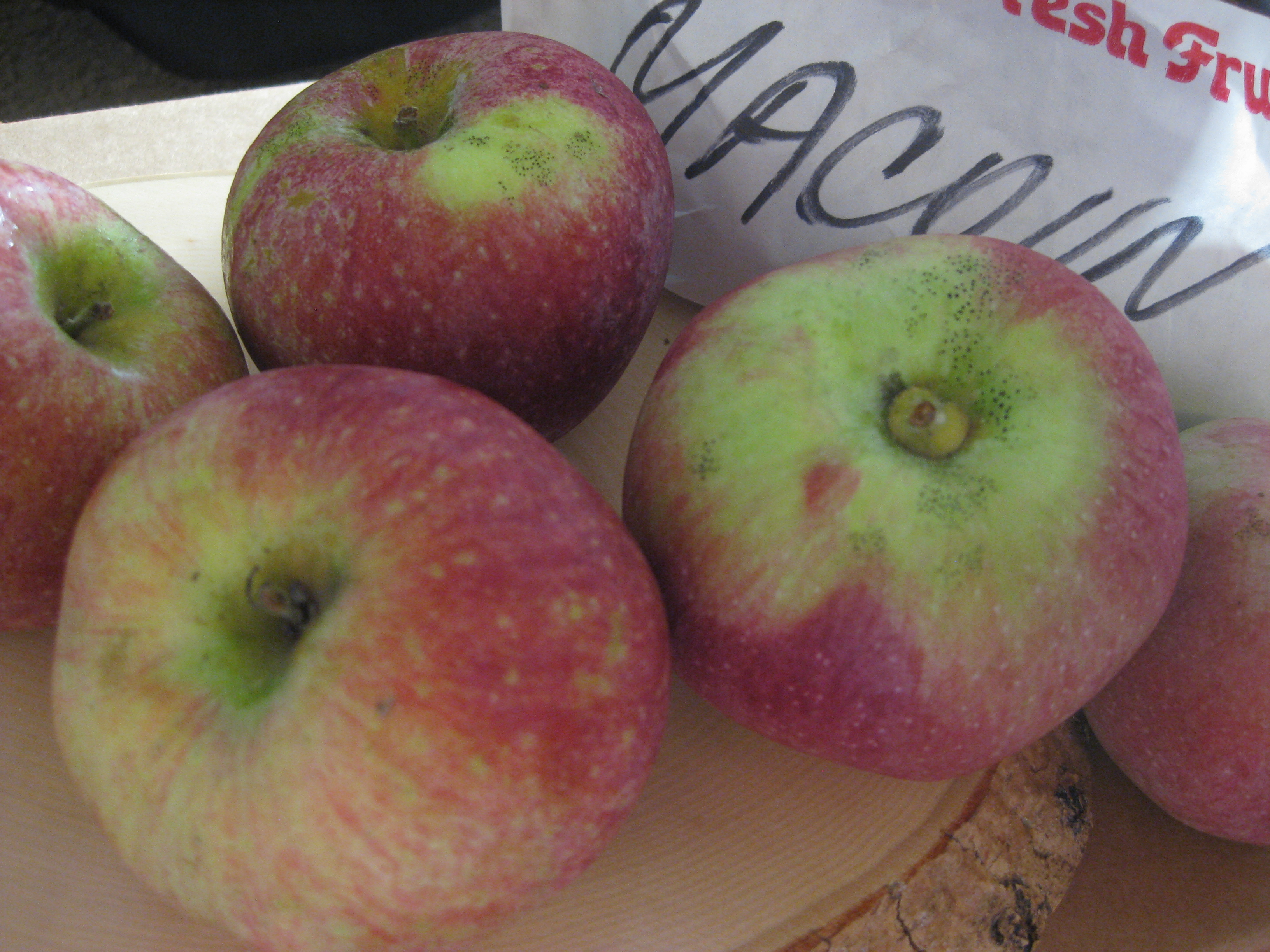
 Smug Scout just received an amazing gift from a friend who went home to the East Coast for the weekend: a half peck of Macoun apples. This gift made Smug Scout reflect on what used to be her favorite season before she moved to Los Angeles fourteen years ago: fall. Where fall used to mean crisp, chilly, smoky air and leaves turning beautiful colors, here it means wildfire season with foul, toxic, smoky air and leaves (not even to mention the entire landscape) turning black and ashy. Wildfire season also means NO Macouns. As far as Smug Scout is concerned, Macouns are the only apples worthy of passionate praise, and they only grow in a limited area of the East Coast, specifically in what is known as the tri-state area, or, for those from other regions, New York, New Jersey, and Connecticut. It is a bounteous region whose specialties cannot be grown or replicated anywhere else. (Yes, Smug Scout is exactly that kind of impossible ex-New Yorker. Please do not even get her started on bagels, pizza, and corn on the cob. She is absolute in her condemnation of any impostors that come from the west–and be warned, that means west of New Jersey.)
Well, it seems Smug Scout has digressed from her topic of the only truly Smug apple, the Macoun. She is not sorry. There are simply times that she needs to express her contempt for L.A., though she does not forget that she can eat local, organic strawberries while her tri-state area family and friends are shoveling snow off their turnips.
So, if you are from their privileged region, you know what Smug Scout is talking about. Otherwise, here are the reasons that Macouns are as Smug as Smug Scout herself. You could even say they are the Smug Scouts of the apple world. Why is that, you ask?
- They only grow in three states. You can see they have chosen well. They have not chosen new states. They have not chosen poor states. And they most certainly have not chosen red states. How arrogant and aristocratic of them!
- They only grow from the end of September till the beginning of November. They give you a time limit because they refuse to spoil you with excess or overindulgence. They know all about the contempt of overstaying one’s welcome. You can see they know all about Granny Smith.
- They do not keep well. They despise cold storage. You will not abandon them for months in some dark, overcrowded hole. They prefer light, space, and plenty of reclaimed wood for display and sale. If you do not give them what they want, they will punish you by turning to flavorless mush.
- They do not like to travel. They refuse to travel in steerage class, which is gloomy, cold, and inhospitable. If they must fly, they prefer to be in their own comfortable half-peck bags, ideally hand-carried onto the plane by a tri-state native to her longing friend on the West Coast.
- They simply will not be degraded into cheap products or mass distribution. You will not see Macouns in commercial apple sauce, conventional baby food, public school free lunches, or absolutely any fast food or chain restaurant. They leave those proletarian duties to their sadly inferior working class relative, the Red Delicious.
There you have it. While you may have thought apples were too pedestrian and American to be Smug, you can see how Macouns even outdo the likes of wild arugula and organic persimmons. Now, if you will excuse Smug Scout, she needs to go eat one immediately.


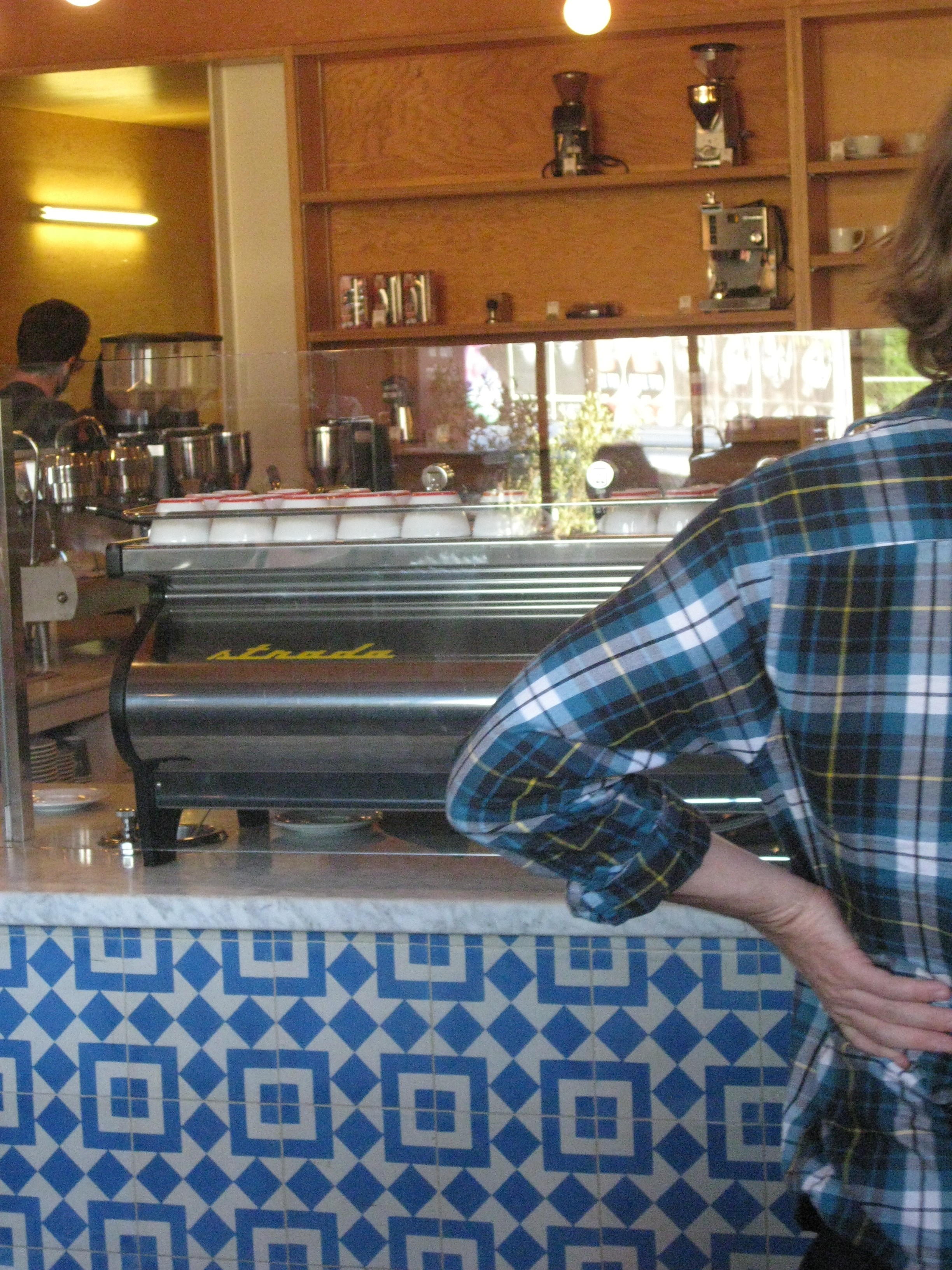
 Lesson 2: While you can skimp on decorating costs, you do need a La Marzocca Strada Mechanical Paddle Commercial Espresso Machine so that your Smug customers will know you have the utmost control of the extraction rate of their single-source Ethiopian coffee. This is the most expensive thing you will buy for your Smug coffee shop, and it will cost you $15,000 because it is made by unionized Italian craftspeople in a workshop (you will not call it a factory) near Florence.
 Lesson 4: Because this is a Smug coffee shop and you will have Smug regular customers, you need to have a menu, printed on obviously recycled paper, that changes every day or at least seems to because you have a date on it. You will probably have the same coffee all the time, but if the third world region where your single-source coffee comes from begins a civil war that leaves the purebred coffee plantations in ruins, you will need to find a less war-torn banana republic to source from. It does not matter; Smug customers will insist on Sub-Saharan African and Central American single-origin coffee, but which specific country is of no consequence. They do not know where those countries are and do not plan to visit them. It is much more important that you use reclaimed plywood clipboards to display your menus.
 Lesson 5: Try to think up other Smug touches so that you do not look crassly commercial. Of course you want to sell a lot of preciously priced coffee beans, faux-handcrafted architectural coffee cups, espresso machines vastly inferior to your Strada Mechanical Paddle, and branded t-shirts made by American Apparel, but it is bad if every object you place is for sale. You need at least one object that is not for sale. You may want to consider an antique steel test tube holder. Tip: do not get test tubes for it. That is the domain of those pretentious, now passé “molecular” restaurants. Get clear glass bottles instead, pour some filtered water in there, and get some local backyard flowers no one will know the name of. Native grasses with blossoms, which you previously knew as weeds, will be perfect.